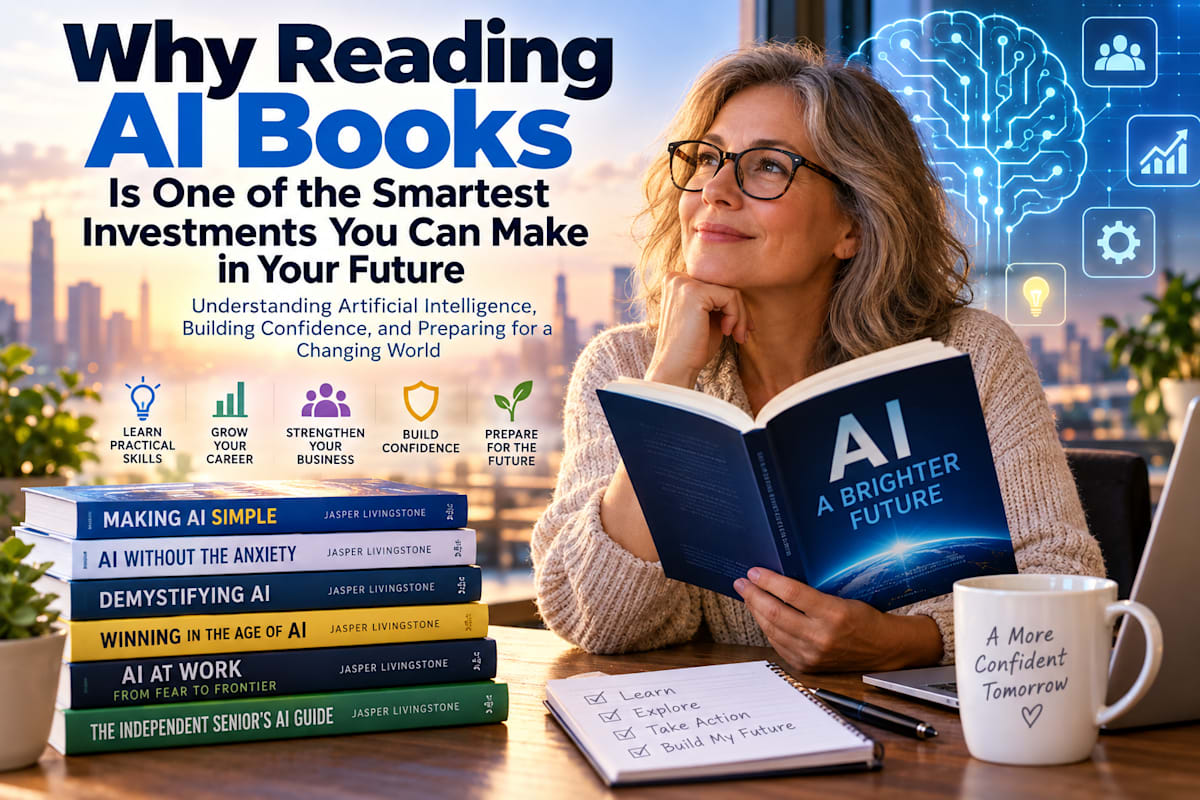
Understanding Artificial Intelligence, Building Confidence, and Preparing for a Changing World
Artificial intelligence is changing how we work, learn, communicate, and make everyday decisions. From writing emails and managing business information to improving productivity and supporting creative work, AI is becoming part of modern life. Yet many people remain uncertain about where to begin, which tools to trust, and how artificial intelligence will affect their future. This growing uncertainty highlights the importance of accessible, practical education, especially through books written for readers who want to understand AI without needing a technical background.
AI-related books offer an opportunity to explore artificial intelligence at your own pace, understand its practical applications, and develop the confidence to use emerging technologies responsibly. Whether you are a working professional, business leader, entrepreneur, retiree, or someone interested in personal development, reading about AI helps you make informed decisions in a world shaped by technological change.
Why AI Books Are Becoming Essential Reading
The discussion surrounding artificial intelligence often focuses on technological breakthroughs, automation, and the possibility of machines replacing human work. Although these developments deserve attention, they represent only part of the story. Artificial intelligence also creates opportunities for individuals to improve their skills, manage information more effectively, and approach familiar challenges from new perspectives.
Reading a well-structured AI book gives you space to understand the ideas behind the technology instead of following every new announcement or application. You begin to recognize the difference between AI capabilities and exaggerated claims, identify situations where AI offers practical value, and understand why human judgment remains important.
Unlike short social media posts or promotional videos, books provide a structured learning experience. They connect fundamental concepts with real-world examples, helping readers build knowledge gradually while considering the benefits, limitations, and responsibilities associated with artificial intelligence.
AI Is No Longer Reserved for Technology Specialists
One of the most important changes in the AI era is the increasing accessibility of artificial intelligence. You do not need to become a programmer, data scientist, or technology expert to benefit from many AI applications. Modern AI tools support everyday activities such as organizing information, planning projects, preparing presentations, exploring new ideas, and simplifying routine administrative tasks.
For example, a small business owner might use AI to prepare marketing materials, review customer feedback, or organize business plans. A working professional might use AI to summarize lengthy reports, structure meeting notes, or explore potential solutions to workplace challenges. Parents might use AI to develop educational activities, while older adults might use accessible AI applications to learn new skills and stay connected with digital services.
The value comes from understanding how to apply these tools appropriately. Practical AI books help readers move beyond curiosity toward informed experimentation while recognizing the importance of checking information, protecting privacy, and retaining human control over important decisions.
Building Career Confidence in the Age of AI
For working professionals, artificial intelligence raises important questions about future employment, skills development, and career stability. Some routine tasks are becoming automated, while employers increasingly value people who understand how to work alongside intelligent technologies.
Preparing for these changes requires more than learning the latest AI application. Professionals need adaptable thinking, communication skills, sound judgment, creativity, and the willingness to continue learning throughout their careers.
AI books focused on career development help readers understand workplace transformation, identify transferable skills, and explore ways to remain relevant as technology evolves. They also encourage professionals to view continuous learning as an ongoing part of career development rather than a response to immediate employment concerns.
For experienced professionals, particularly those considering a career transition after 40 or 50, understanding AI offers an opportunity to combine years of industry knowledge with new digital capabilities. Experience, professional relationships, decision-making skills, and practical expertise remain valuable, especially when supported by an informed understanding of modern technology.
Why Business Leaders Need to Understand AI
Artificial intelligence is influencing business strategy, customer service, operations, financial planning, and organizational decision-making. However, introducing AI into a business involves more than purchasing software or automating existing processes.
Business leaders need to identify meaningful use cases, assess implementation costs, understand data quality requirements, and establish appropriate governance. They also need to consider employee concerns, organizational readiness, cybersecurity, and the ethical responsibilities associated with AI-driven decisions.
Books focused on AI leadership and business transformation provide a foundation for approaching these questions systematically. They encourage leaders to evaluate AI investments based on measurable business outcomes while recognizing the importance of people, processes, and organizational culture.
Effective AI adoption begins with understanding the problem an organization wants to solve. Technology becomes valuable when it supports clear business objectives and improves how people perform their work.
Overcoming AI Anxiety Through Knowledge
For many readers, the greatest barrier to learning artificial intelligence is not technical complexity. It is uncertainty.
People worry about making mistakes, losing control over their information, being left behind professionally, or becoming dependent on technologies they do not fully understand. These concerns deserve thoughtful attention, especially as AI applications become more common across workplaces and personal activities.
Accessible AI books help readers approach these challenges through clear explanations, practical examples, and manageable learning steps. Instead of attempting to master every available AI tool, readers benefit from learning fundamental principles and exploring a small number of applications relevant to their lives.
Confidence grows through understanding, practice, and the ability to evaluate results critically. Readers who understand both the strengths and limitations of AI are better prepared to use it responsibly.
Recommended AI Books by Jasper Livingstone
Jasper Livingstone writes about artificial intelligence with an emphasis on practical understanding, personal development, career readiness, and responsible technology adoption. His AI-related titles address different reader needs, from beginners exploring AI for the first time to business professionals preparing for technological transformation.
1. Making AI Simple
A useful starting point for readers who want straightforward explanations of artificial intelligence and its everyday applications. This book introduces AI-related thinking in an approachable way, making it suitable for individuals beginning their learning journey.
Explore: https://chiify.com/books/making-ai-simple
2. AI Without The Anxiety
Designed for readers who feel uncertain about emerging technologies, this title focuses on developing greater confidence and approaching AI with a balanced perspective.
Explore: https://chiify.com/books/ai-without-the-anxiety-2
3. Demystifying AI
For readers who want to move beyond confusing terminology and understand the broader significance of artificial intelligence, this book offers an introduction to the subject and its practical relevance.
Explore: https://chiify.com/books/demystifying-ai-2
4. Winning in the Age of AI
A title for professionals, entrepreneurs, and business-minded readers interested in preparing for an increasingly AI-enabled economy. It explores the importance of adaptability, learning, and strategic thinking.
Explore: https://chiify.com/books/winning-in-the-age-of-ai
5. AI At Work: From Fear To Frontier
Focused on the changing workplace, this book encourages readers to consider how artificial intelligence fits into professional activities while maintaining attention to safe and effective adoption.
6. The Independent Senior's AI Guide
Artificial intelligence is relevant to older adults as well as working professionals. This title introduces seniors to AI-related opportunities and encourages greater confidence when engaging with modern digital technology.
Together, these books offer readers several entry points into artificial intelligence based on their experience, interests, and personal goals.
How to Choose the Right AI Book for Your Needs
Selecting an AI book begins with understanding what you want to achieve. A beginner who wants to understand everyday AI applications has different learning priorities from a business executive evaluating enterprise automation or a professional concerned about career changes.
If you are new to artificial intelligence, start with a book explaining common concepts, practical examples, and basic limitations. If your primary concern involves employment or professional development, explore titles focused on career adaptability and future workplace skills. Business leaders benefit from books addressing AI strategy, implementation planning, governance, and organizational change.
Readers interested in personal growth might prefer books connecting technological understanding with confidence, lifelong learning, and independent thinking.
The most useful book is one aligned with your current needs and offering ideas you are prepared to apply.
Turn What You Read Into Practical Action
Reading about artificial intelligence becomes more meaningful when you connect new knowledge with everyday activities. After completing a chapter, identify one idea relevant to your work or personal life and explore how it fits your circumstances.
For example, after learning about AI-assisted writing, experiment with preparing a simple email draft and reviewing the results for accuracy and tone. After reading about workplace automation, examine repetitive tasks in your daily routine and identify areas where technology might save time. If you are exploring AI for business, consider a small pilot project with clear objectives and measurable results.
Keep track of what works, where AI produces inaccurate or incomplete responses, and which activities still require careful human oversight. These observations help develop practical understanding and better decision-making.
AI literacy develops through consistent learning, thoughtful experimentation, and the ability to question results rather than accept them automatically.
The Future Belongs to People Who Keep Learning
Artificial intelligence will continue to influence everyday life, professional development, and business operations. Although no book predicts every technological development, a strong foundation in AI principles helps readers understand new applications and respond to change with greater confidence.
Reading AI books represents an investment in knowledge, adaptability, and independent thinking. It encourages readers to ask better questions, recognize useful opportunities, and remain actively involved in decisions affecting their lives and careers.
The objective is not to compete with artificial intelligence or become dependent on it. It is to understand how technology works, where it offers value, and how people retain responsibility for the choices they make.
Your AI learning journey begins with curiosity, develops through reading and practice, and grows stronger through continued exploration.
Start Your AI Learning Journey Today
Whether you want to understand artificial intelligence for the first time, prepare for changes in your career, or explore AI applications for business and everyday life, Jasper Livingstone's collection of AI-related books offers practical subjects worth exploring.
Choose a topic connected to your interests, begin with one book, and take a small step toward becoming a more confident and informed user of artificial intelligence.
Explore more books by Jasper Livingstone:
https://chiify.com/author/eng-peng-ong
https://payhip.com/LoveAllServeAllBooks
Jasper Livingstone writes about artificial intelligence, career development, personal growth, and lifelong learning, helping readers approach changing technologies with practical knowledge and greater confidence.